
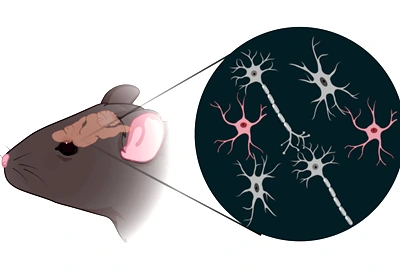
In various animal models, stem cell therapies have shown beneficial effects in stroke recovery through immune modulation, neurogenesis, angiogenesis, blood-brain barrier repair, and neural circuit restoration. Recent advances have increased the therapeutic potential of neural progenitor cells (NPCs) derived from induced pluripotent stem cells (iPSCs) in animals with stroke. In this study, the authors from Switzerland and the United States assessed the efficacy and regenerative capacity of human NPCs in stroke-injured mice. They hypothesized that intraparenchymal transplantation of neural progenitor cells could improve tissue repair and motor recovery in stroke-injured mice seven days after stroke.
About the study
Mice were assigned to one of three treatment groups: the first group (n = 11) received a photothrombotic stroke and underwent NPC transplantation at 7 days post-injury (dpi), the second group (n = 11) received a photothrombotic stroke and sham transplantation, and the third group (n = 4) received sham surgery and sham transplantation, serving as a negative control. Thirty minutes after stroke induction, Laser-Doppler imaging confirmed stroke with a 60-70% reduction in cerebral blood flow in both groups that received a stroke compared to non-stroked animals.
To determine the efficacy of NPC treatment, several parameters were evaluated over five weeks. Motor function was assessed for all treatment groups at different time points by performing several behavioral tests (rotarod test, horizontal ladder walk, horizontal runway walk). To track survival and migration of transplanted NPCs, mice were subjected to bioluminescence imaging on the day of NPC transplantation, four days later, and weekly thereafter. After sacrifice, histological analysis was performed to characterize grafted cells and evaluate expression levels of cell markers with key functions in stroke pathology.
Results
Survival of transplanted NPCs
Transplanted cell survival was assessed by luciferase bioluminescence imaging over a 35-day time course. In mice that received NPC transplantation, cell survival remained relatively constant during the first two weeks after implantation, followed by a significant increase in signal until 35 dpi. No increase in bioluminescence signal was observed between 35 and 43 dpi. As expected, no signal was detected in the vehicle and sham control groups that did not receive cells. These data indicate that NPC grafts can survive for extended periods after implantation.
Microglial activation and apoptosis
After the stroke, resting microglia morphology changed from highly ramified to a more amoeboid type. Three morphological features (branching, circularity, ramification) and Iba1 fluorescence intensity were quantified to study the effect of NPC therapy on microglial activation. Mice that received NPCs had a significantly reduced Iba1 immunoreactivity (32%) within the stroke core and increased branching and ramification indexes compared to vehicle animals. The increase in GFAP immunoreactivity, indicating glial scar formation, as well as the analysis of apoptosis, did not reach statistical significance. These results suggest that NPC therapy reduces microglial activation but does not affect apoptosis.
Axonal sprouting and neurogenesis
Immunoreactivity of neurofilament light (NF-L) and heavy chain (NF-H), major proteins of the neuronal cytoskeleton, was used to quantify overall axon regeneration. Neurite extensions derived from the NPCs were evaluated using human-specific neural cell adhesion molecule (hNCAM) staining. Engrafted NPCs promoted neurogenesis and axonogenesis in and around the infarct region. Among animals receiving NPCs, 71% exhibited axonal extensions to the ipsilateral corpus callosum, and 57% exhibited neurites along the corpus callosum to the contralateral hemisphere. Notably, in 90% of all transplanted animals, cells extended their neurites to the ipsilateral primary and secondary motor cortex and the primary somatosensory cortex. These findings suggest that NPC transplantation enhances axonal sprouting and neurite outgrowth across multiple brain areas.
Vasculature density and vessel leakage
To visualize blood vessel distribution in brain sections, coronal brain sections were stained for CD31. 43 days after stroke induction, an ischemic border zone, characterized by hypovascularization, extended up to 300μm around the stroke core in vehicle-receiving animals. Vascular density was significantly increased in the ischemic zone of the NPC group compared to the vehicle group. Interestingly, in NPC-transplanted animals, vascular area and blood vessel length recovered in the ischemic cortex to similar levels as in the contralateral intact cortex. In addition, NPC-transplanted animals showed an increase in the number of newly formed blood vessels per mm2 in the ischemic border zone compared to vehicle-receiving animals.
To assess vessel leakage, coronal brain slices were co-stained with CD31 and fibrinogen antibodies. A decrease in relative leakage was found in the stroke core of mice that received NPCs compared to those that had not received cells, while no difference was observed in the ischemic border zone of both treatment groups. These data indicate that NPC transplantation is associated with increased vascular repair and increased blood vessel density in the ischemic core. The authors hypothesized that NPC grafts secrete angiogenic factors that promote vascular repair, vessel maturation, and successfully support tissue regeneration while reducing the risk of vascular leakage and bleeding.
Motor function following stroke
The motor function of treatment groups was assessed with previously established behavioral set-ups (rotarod assay, horizontal ladder walk, runway walk). Behavior assessment was conducted at multiple time points: pre-stroke, at day 3 post-stroke to assess the severity of motor impairment, and then at regular intervals following transplantation surgery (days 7, 21, 28, 35, and 42) to monitor the recovery of motor function.
After stroke induction, both the treatment and vehicle groups showed decreased motor performance in the rotarod test. Five weeks after stroke induction, mice that received NPCs showed an improved recovery in the rotarod test compared to the vehicle group. These findings indicate that NPC therapy improved long-term functional recovery following a stroke. The neuromuscular junction innervation status in the extensor digitorum longus and soleus muscles of the hindlimbs did not differ between treatment groups.
Molecular profiling of transplanted cell grafts and graft-host crosstalk
Histological and molecular characterization of the cell graft revealed a preferential differentiation from NPCs to GABAergic neurons. Half of the transplanted NPCs differentiated into neurons with a GABAergic phenotype. Molecular profiling of single-cell graft and surrounding host cells suggests a potential graft-host crosstalk, where GABAergic cell grafts may induce tissue regeneration through Neurexin (NRXN), Neuregulin (NRG), Neural Cell Adhesion Molecule (NCAM), and SLIT signaling pathways, which are associated with neuronal regeneration, synaptic plasticity, dendritic arborization, and axon guidance.
Conclusion
Mice that received neural progenitor cells derived from induced pluripotent stem cells exhibited reduced inflammatory response and increased post-ischemic angiogenesis in the ischemic cortex, along with improved vessel integrity in the stroke core, and increased recovery of motor function. The authors provided molecular definitions of graft-derived cells and proposed preferential differentiation into glutamatergic and GABAergic neurons. Graft-derived GABAergic neurons communicate with stroke-injured host tissue likely through NRXN, NCAM, SLIT, and NRG signaling pathways.
The authors emphasized that these findings could have relevance not only for stroke therapy, but also for treating a broader range of acute neurological injuries that involve neuronal loss.
This article was published in Nature Communications.
Reference
Weber RZ, Achón Buil B, Rentsch NH et al. Neural xenografts contribute to long-term recovery in stroke via molecular graft-host crosstalk. Nat Commun 16, 8224 (2025). https://doi.org/10.1038/s41467-025-63725-3
