
Researchers from Italy and the United States tested the effects of the severe acute respiratory syndrome coronavirus (SARS-CoV-2) spike (S) protein on the overall procoagulation activity and the involvement of the interaction between the S protein and the estrogen receptor alpha (ERα) in the control of procoagulation activity in a human endothelial cell line.
Previous studies suggested that the interaction between the SARS-CoV-2 S protein and the estrogen receptor alpha (ERα) is involved in COVID-19 pathology via modulation of ERα signalling, which is complex and can have contrasting biological effects across different cell types. Data suggest that the S protein binds to ERα, which results in modulation of ERα signalling. (Solis O et al. The SARS-CoV-2 spike protein binds and modulates estrogen receptors. Science Advances. 30 Nov, 2022, Vol 8, Issue 48. https://www.science.org/doi/10.1126/sciadv.add4150
About the study and Results
The scientists used the immortalized human endothelial cell line Ea.Hy926 and exposed it to increasing concentrations of the S protein. As controls, they used 17β-estradiol (E2), a natural ERα agonist, raloxifene, a selective estrogen receptor modulator, fulvestrant, a selective estrogen receptor downregulator/degrader, and tumor necrosis factor alpha, a pro-inflammatory cytokine involved in SARS-CoV-2 coagulopathy.
The results showed a dose-dependent increase in procoagulant activity and tissue factor expression at the mRNA level in endothelial cells stimulated with the S protein. The use of both ERα signaling inhibitors significantly (but not completely) blunted the effect of S protein, suggesting the interaction between the S protein and ERα in the control of procoagulation activity in a human endothelial cell line.
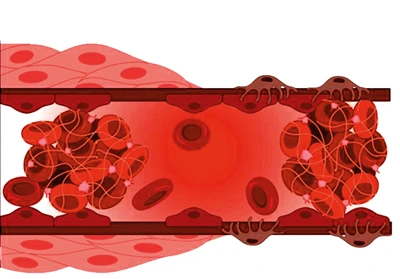
The authors pointed to clinical and in vitro studies that demonstrated the potential effectiveness of selective estrogen receptor modulators (e.g., raloxifene) as an anti-viral agent in COVID-19 and other infectious diseases. They emphasized that it remains unknown whether the putative SARS-CoV-2 S protein/ERα complex has the ability to bind directly to specific regulatory sequences in tissue factor or other coagulation factors in endothelial cell lines or whether it affects other transcriptional circuits involved in controlling the coagulation cascade.
The researchers also noted that results from the COVID-19 vaccination campaign revealed a potential risk for vaccine-induced immune thrombotic thrombocytopenia or thrombosis with thrombocytopenia syndrome. Although this risk is extremely low, it is important to consider the worldwide impact of the SARS-CoV-2 mRNA vaccination campaign, as well as the need to develop stratification criteria to identify individuals potentially at risk of thrombosis in response to mRNA-based immunization.
Conclusion
The research team concluded that their findings suggest a novel pathological action of the S protein on the vascular level. The results showed an infection-independent activity of the SARS-CoV-2 S protein in human endothelial cells via the ERα signaling pathway, increasing the procoagulation activity and upregulating tissue factor expression/activity.
Although the SARS-CoV-2 S protein concentrations used in this study are much higher than the maximum values reached after the first and second doses of the available mRNA vaccines, the authors noted that their findings shed light on the causal mechanisms of certain adverse events associated with anti-SARS-CoV-2 mRNA vaccines. In rare cases, mRNA immunization can increase the risk of thrombosis.
This study was published in Signal Transduction and Targeted Therapy.
Reference
Barbieri, S.S., Cattani, F., Sandrini, L.et al. Relevance of Spike/Estrogen Receptor-α interaction for endothelial-based coagulopathy induced by SARS-CoV-2. Sig Transduct Target Ther 8, 203 (2023). https://www.nature.com/articles/s41392-023-01488-3
