
SARS-CoV-2 infection has been shown to reactivate chronic viruses such as Herpesviridae, including Epstein–Barr virus (EBV), cytomegalovirus (CMV), human herpesvirus 6 (HHV6) and human herpesvirus 8 (HHV8), but the full extent, temporal dynamics and immunological impact of viral reactivation in COVID-19 remain incompletely understood. In this longitudinal prospective observational study of patients hospitalized for COVID-19 and followed for 12 months post-hospitalization, the authors address the question of viral reactivation in COVID-19 and long COVID syndrome.
The family Anelloviridae comprises small, non-enveloped, single-stranded circular DNA viruses known for their global ubiquity and extreme genetic diversity. Prevalence rates in healthy adult populations approach 100%. The host immune system appears to exquisitely control their replication, making them a sensitive, real-time biomarker of immune competence. It is widely hypothesized that anelloviruses may function as indicators of immune dysregulation or inflammation rather than as primary pathogens. For example, in individuals infected with HIV, anellovirus loads are significantly higher than in healthy controls and correlate with the degree of immunodeficiency.
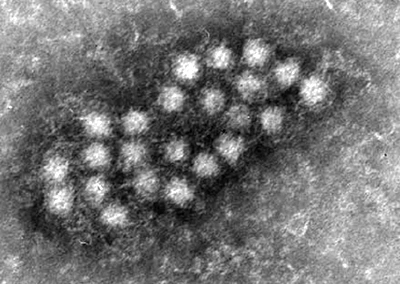
Negative contrast electron microscopy of particles of an Anelloviridae isolate. (From Itoh et al. (2000) Biochem. Biophys. Res. Commun., 279, 718724.
About the study
The prospective longitudinal Immunophenotyping Assessment in a COVID-19 Cohort (IMPACC) study enrolled 1,154 patients hospitalized for COVID-19 across 20 US hospitals between May 2020 and March 2021. All participants were SARS-CoV-2-positive (confirmed by reverse transcription PCR testing) and were COVID-19 vaccine-naive at enrollment time. Participants were assigned to one of five trajectory groups (TG) based on a seven-point ordinal scale that characterized the degree of respiratory illness and reflected acute COVID-19 severity. Similarly, participants were clustered into four PRO groups based on convalescent survey responses collected at 3, 6, 9, and 12 months using the EQ-5D-5L health recovery score (a scale that indicates overall physical and mental function compared to pre-COVID function), and the following PROMIS forms: Physical Function, Cognitive Function, Global Health Mental, Psychosocial Illness Impact, and Dyspnea Time Extension.
Nasal swabs, blood, and endotracheal aspirates (for ventilated patients) were collected within 72 hours of hospital admission (visit 1) and on days 4, 7, 14, 21, and 28 after hospital admission, as well as at 3, 6, 9, and 12 months (the convalescent samples). In addition, whole-blood immune cell populations, EBV and CMV antibody titers, serum cytokine levels, and the plasma proteome were assessed.
Results
Acute COVID-19
Participants were assigned to one of five trajectory groups classified as mild (TG1, n = 228), moderate (TG2, n = 263), severe (TG3, n = 333), critical (TG4, n = 222), or fatal within 28 days (TG5, n = 108).
Viral RNA was identified in nasal, endotracheal aspirate, and PBMCs for a diverse range of human-infecting viruses beyond SARS-CoV-2, including EBV, CMV, HHV6, human alphaherpesvirus 1 and 2 (HSV1, HSV2), and several Anelloviridae and enterovirus species. SARS-CoV-2 was the most prevalent virus and was primarily found in nasal and endotracheal aspirates. Among Herpesviridae, transcripts of HSV1, EBV, and CMV were commonly detected across compartments during acute COVID-19 and were detected less frequently during the convalescent period (2 months or more after admission). Additionally, a wide range of Anelloviridae and acute-infecting enterovirus species were detected.
Notably, each viral species displayed unique temporal dynamics of reactivation relative to hospital admission. EBV reactivated early in the disease course; 24% of participants had detectable transcripts near admission time (days 1–8), followed by a gradual decline over time. Unlike EBV, Anelloviridae transcript frequency remained constant until day 20 post-admission, followed by a slow decline. HSV1 and CMV reactivated later in the disease course. At 19–23 days post-admission, HSV1 was detected in 43% of endotracheal aspirate samples and 15% of nasal samples, and CMV was detected in 8% of PBMC samples.
Anelloviridae transcripts in PBMCs were significantly associated with history of solid organ transplantation, immunosuppressive medications, shock, intensive care unit admission, and myocardial infarction. This demonstrates that Anelloviridae reactivation was not exclusive to long-term medication-associated immunosuppression. For Herpesviridae, CMV transcripts in the nasal compartment were linked to pneumothorax, whereas CMV in the PBMCs was associated with bacteraemia, pulmonary vascular disease, renal complications, shock, and stroke. EBV transcripts in the nasal compartment were associated with shock, whereas EBV in PBMCs correlated with liver failure, concurrent infections, shock and the overall number of complications. HSV1 in the nasal compartment was significantly associated with acute venous thromboembolism and shock, and inversely associated with liver disease.
Significant associations between COVID-19 severity and Herpesviridae (CMV, EBV and HSV1) and Anelloviridae transcripts were found within 40 days of hospital admission. When limiting to TG4 participants, those with CMV transcripts in any respiratory compartment or with nasal EBV or HSV1 were more likely to die within 1 year. Notably, prevalence of chronic viruses was not significantly different between groups TG4 and TG5.
Viral reactivation and host immune responses
Characterization of the host immune responses revealed that participants with EBV transcripts in PBMCs had persistently elevated titres of anti-EBV IgG and IgA antibodies and increased proportions of B-cell plasmablasts, the primary host cells of the virus. Detection of both EBV (nasal) and CMV (PBMC) was associated with a higher frequency of activated CD4+ and CD8+ T cells. In addition, different viruses had distinct cytokine profiles, although several cytokines overlapped between viruses, including CXCL10, CXCL11, and IL-18. EBV in PBMCs was associated with increases in key cytokines, including IL-6, CCL7, CCL2, IL-10, and CXCL10. EBV in the nasal compartment was correlated with increases in IL-18, CXCL11, CXCL10, IL-18R1, CD274, IL-15RA, IL22RA1, HGF, IFNγ, CCL8 and MMP10 and a decrease in KITLG, suggesting that nasal EBV possibly reflects a more severe state of viral reactivation. HSV1 (nasal) and CMV (PBMCs) were both associated with increases in IL-18, CXCL11, CXCL10, IL-18R1, CD274, IL-15RA, CD40, CXCL9, CX3CL1, TNF and CDCP1. HSV1 also correlated with increased CCL25, SLAMF1, CD5, FGF23, TNFRSF9 and IL-10RB, whereas CMV was associated with increased HGF, IFNγ, CCL8, CCL7, LIFR, CD8A, ADA and CXCL8 and decreased MMP1 and IL-4. Anelloviridae were associated only with increases in CXCL11 and IL-18 and a decrease in TNFSF11.
Viral reactivation in long COVID
Viral reactivation was assessed across patient-reported outcome (PRO) groups, which comprised participants reporting minimal to no deficits, physical deficits (physical disability or fatigue), cognitive deficits, and global deficits (both physical and cognitive). Anelloviridae and enteroviruses were the most frequently detected viruses during the convalescent period. Notably, the most prevalent transcripts in the physical PRO group (physical disability or fatigue) were Anelloviridae, even after controlling for sex, age, immunosuppressive medications, and acute COVID-19 severity. This finding suggests that detection of Anelloviridae transcripts may serve as a potential signature of persistent physical disability in patients with long COVID. The Anelloviridae-associated gene expression signature was consistent between the acute and convalescent periods. In addition, Anelloviridae reactivation in PBMCs was associated with nasal transcriptome changes, including keratinization, downregulation of proteasome-related proteins, and enrichment of genes involved in neutrophil degranulation, suggesting that Anelloviridae may contribute to an inflammatory host response.
Conclusion
This study has shown that multiple chronic viruses reactivate during acute COVID-19 and long COVID, particularly those from the Herpesviridae and Anelloviridae families. The results also demonstrated a novel association between the long COVID physical PRO group and Anelloviridae transcripts after hospitalization, even when controlling for age, chronic immunosuppression by medications, and acute COVID-19 severity. These findings highlight the need for future research to dissect the role of Anelloviridae in patients with long COVID.
Journal Reference
Maguire C, Chen J, Rouphael N et al. Virus reactivation in acute and long COVID-19. Nature 656, 700–711 (2026). https://doi.org/10.1038/s41586-026-10740-z
